


Last Updated: October 24, 2026
Quick Summary
To preserve family heirlooms, identify which items matter most to your family, document them with photographs and stories, store them in archival-quality materials at stable temperatures between 60-70 degrees Fahrenheit with humidity between 30-40 percent, and keep digital backups in multiple locations.
- Store photos and documents in acid-free boxes and archival sleeves, never in regular plastic bags or PVC sleeves.
- Maintain consistent temperature and humidity to prevent materials from expanding and contracting, which causes cracking and warping.
- Handle heirlooms with clean hands or cotton gloves, supporting items from underneath and avoiding direct contact with surfaces.
- Create digital copies of precious photos and documents on external hard drives and cloud storage as backup protection.
- Document heirlooms with photographs from multiple angles, written descriptions, and recorded stories from older family members.
Table of Contents
- What Counts as a Family Heirloom Worth Preserving
- How to Document Family Heirlooms and Capture Their Stories
- How to Preserve Family Photos: Materials and Methods
- How to Store Family History Documents Safely
- Creating Safe Storage Conditions for Treasured Items
- Family Heirloom Ideas: Creating New Treasures to Pass Down
- Organizing and Sharing Your Family Heritage
- Start Preserving Your Family's Treasured Legacy Today
- Frequently Asked Questions
What Counts as a Family Heirloom Worth Preserving
A family heirloom is any meaningful object passed down through generations that carries emotional, historical, or sentimental value to your family, and learning how to preserve family heirlooms ensures they survive for future generations.
Heirlooms take many forms. Jewelry passed from grandmother to granddaughter. Letters written during wartime. Military medals earned by a relative. Children's drawings from decades ago. Wedding dresses worn by multiple brides. Old photographs. Handwritten recipes. Collections of meaningful keepsakes stored in a hope chest.
The key question isn't whether an object is valuable by market standards. It's whether that item holds personal meaning for your family.
At Keepsake & Co., we understand that preserving these treasured items means more than keeping them safe, it means honoring the memories and connections they represent. The first step in preserving family heirlooms for future generations is identifying which items matter most to your family.
How to Document Family Heirlooms and Capture Their Stories
Documenting your family heirlooms means recording both the physical details of the objects and the stories behind them.
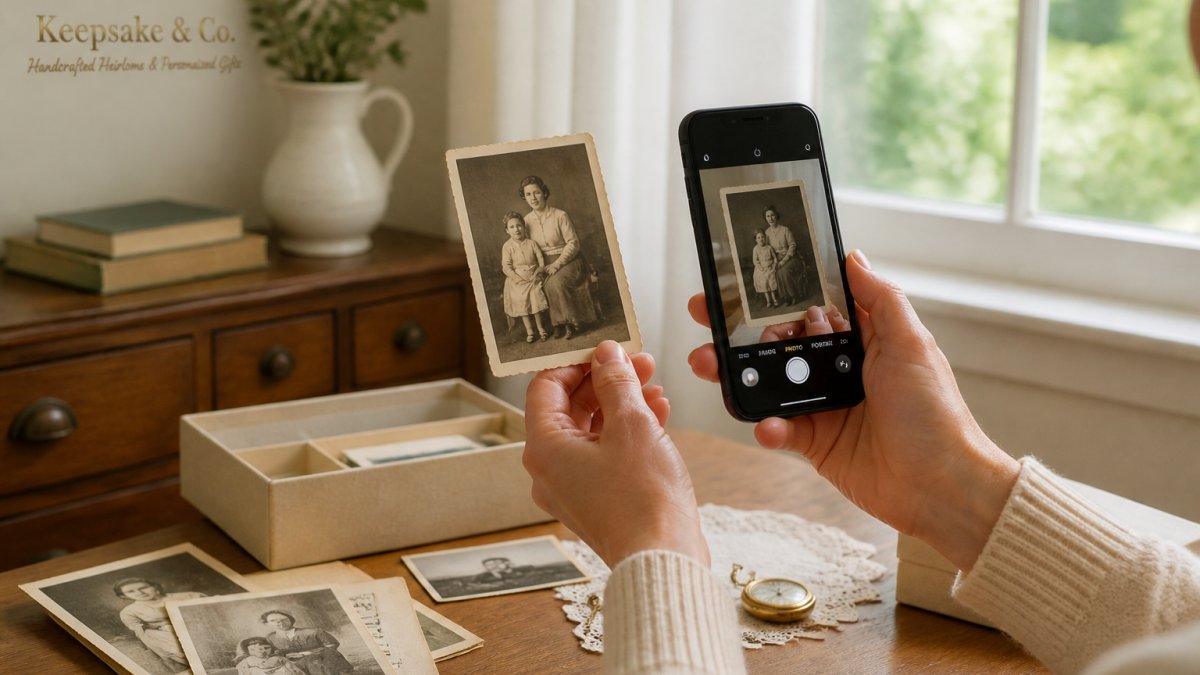
Start by photographing each heirloom from multiple angles. Take a detail photograph showing the entire object, then close-up shots of any markings, signatures, dates, or wear patterns.
Create a catalog for each item. Record the object's name, approximate age, materials, dimensions, and condition. Note who originally owned it and how it came to your family.
Consider recording oral history. Interview older family members and ask them to share memories about specific heirlooms. Audio or video recordings capture the emotion and detail that written notes might miss.
Digitize your documentation. Scan photographs, letters, and documents. Save all records, photos, written descriptions, audio files, and video, in multiple locations. Use the People Places Memories Journal to organize and record family stories alongside your physical documentation.
How to Preserve Family Photos: Materials and Methods
Family photographs are among the most fragile heirlooms. Light, humidity, temperature changes, and poor storage materials all damage photos over time.
Photographs deteriorate because of acid, moisture, and light exposure. Acid comes from poor-quality storage materials, regular paper, cardboard boxes, and plastic sleeves contain acids that slowly destroy photo emulsions. Moisture encourages mold and fading.
Use archival-quality materials for photo storage. Acid-free paper, archival file folders, and flap envelopes protect photos from chemical damage. Never store photos in regular plastic bags or PVC sleeves, which trap moisture and off-gas harmful chemicals.
Store photos in a cool, dry place. The ideal temperature range is 60-70 degrees Fahrenheit, with humidity between 30-40 percent. Avoid basements, attics, and garages where temperature and humidity fluctuate dramatically.
Handle photos carefully. Wear clean, dry hands or cotton gloves when touching originals. Hold photos by the edges only, never the image surface.
Create digital copies of your most precious photos. High-resolution scans preserve the image data even if the physical photo deteriorates.
How to Store Family History Documents Safely
Documents, letters, certificates, diaries, and handwritten records, form the written record of your family heritage. These items are vulnerable to moisture, insects, acid damage, and physical deterioration. Safe storage requires specific conditions and materials.
Documents deteriorate from acid in the paper itself and from storage materials. Old papers contain acid that causes yellowing and brittleness. Poor-quality storage boxes and folders accelerate this damage.
Store documents in archival file folders and acid-free boxes. Use acid-free sleeves for individual items. Never use rubber bands, paper clips, or regular envelopes, which cause creasing and acid transfer.
Maintain stable temperature and humidity. Documents stored in fluctuating conditions expand and contract, causing warping and cracking. Keep documents in a cool, dry room with consistent conditions.
Handle documents minimally. Wear cotton gloves when touching originals. Support documents from underneath when moving them. Never fold, crease, or force documents flat if they naturally curl.
Digitize important documents. Scan certificates, letters, and records at high resolution. Store digital copies on an external hard drive and in cloud storage.
Creating Safe Storage Conditions for Treasured Items
Proper storage conditions protect all types of family heirlooms, jewelry, textiles, ceramics, metal objects, and mixed-material pieces. The right environment slows deterioration and keeps treasured items safe for future generations.
Environmental Controls and Monitoring
Temperature and humidity are the primary environmental factors affecting heirlooms. Fluctuations in either cause materials to expand and contract, leading to cracking, warping, and separation. Stable conditions preserve items far better than perfect conditions that keep changing.
Life is Better With You - Heirloom Blanket →
Maintain consistent temperature between 60-70 degrees Fahrenheit. Avoid rooms with heating vents, air conditioning units, or windows that create temperature swings. Interior closets and interior rooms maintain more stable temperatures than exterior walls exposed to outdoor weather.
Keep humidity between 30-40 percent. This range prevents moisture damage while avoiding the brittleness that comes with extremely dry air. Use a hygrometer to monitor humidity levels. If humidity climbs above 50 percent, use a dehumidifier.
Store heirlooms away from direct sunlight. UV light fades colors, damages fibers, and degrades paper and photographs. Use opaque storage containers or cover windows with UV-blocking film if items must be stored in rooms with windows. Keep stored items in darkness when possible.
Handling and Cleaning Fragile Objects
How you handle heirlooms determines whether they survive intact or suffer damage. Fragile items require careful techniques and proper preparation before cleaning.
Always handle heirlooms with clean, dry hands or cotton gloves. Skin oils transfer to surfaces and attract dust and dirt. Never touch the visible surface of photographs, paintings, or delicate textiles.
Before cleaning any heirloom, assess its condition. Fragile items may need professional conservation rather than home cleaning. If an object shows signs of loose parts, flaking paint, or structural damage, consult a conservator before attempting any cleaning.
For safe cleaning, use only gentle methods. Soft brushes or microfiber cloths remove dust without scratching. Never use water, commercial cleaners, or abrasive materials on valuable items.
Store fragile items individually. Use acid-free tissue paper to wrap items and separate them from other objects. Avoid stacking fragile pieces. Store them in boxes with dividers or compartments so each item has its own space.
Proper storage conditions protect all types of family heirlooms by maintaining stable temperature, humidity, and light exposure.
| Factor | Ideal Range | Notes |
|---|---|---|
| Temperature | 60-70 degrees Fahrenheit | Avoid heating vents and exterior walls |
| Humidity | 30-40 percent | Use hygrometer to monitor levels |
| Light | Darkness or UV-blocked | Avoid direct sunlight and UV exposure |
| Location | Interior closet or room | Better than basements, attics, or garages |
Family Heirloom Ideas: Creating New Treasures to Pass Down
Your family's most meaningful heirlooms don't all have to be antiques. Many treasures that will matter to future generations are being created right now. Intentionally creating items designed to become heirlooms ensures your family has meaningful objects to pass down.
Personal keepsakes created with intention carry deep significance. The Life is Better With You Heirloom Blanket transforms a cherished photo into a woven textile that can be wrapped around loved ones and passed down for decades. Similarly, the To My Daughter Heirloom Blanket creates a personalized treasure specifically designed to become a family heirloom, something a daughter receives and later passes to her own children.


Other new heirlooms worth creating include handwritten recipe collections, journals documenting family stories, custom artwork featuring family names or dates, or recorded video messages from family members. These items have little monetary value but enormous emotional worth. They preserve voices, handwriting, and personal perspectives that will matter to future generations.
Document the creation of new heirlooms. Record when the item was made, who created it, and why it matters. This context transforms a beautiful object into a meaningful family treasure with a documented story.
Organizing and Sharing Your Family Heritage
Once you've documented and preserved your family heirlooms, organize everything so information is accessible to family members. A well-organized system ensures that knowledge about your treasures doesn't disappear if something happens to you.
Create a master inventory of all heirlooms. Include photographs, descriptions, locations, and stories for each item. Organize by category, jewelry, photographs, documents, textiles, or by family branch if you have a large collection. Digital spreadsheets work well for searchable organization.
Store this inventory in multiple locations. Keep a physical copy in a fireproof safe at home. Store digital copies on an external hard drive and in cloud storage.
Consider creating a family archive or heritage book. Compile photographs, documents, and stories into a organized collection that tells your family's history. Digital archives work well for sharing across distances. Physical books become treasured items themselves.
Share heirlooms and their stories with younger family members. Explain why items matter and what they represent. Let children handle items under supervision so they develop respect for family treasures.
Start Preserving Your Family's Treasured Legacy Today
Preserving family heirlooms for future generations is an act of love that honors your ancestors and strengthens your family's connection across time. The process doesn't require expensive equipment or professional expertise, it requires intention, proper materials, and consistent care.
To preserve family heirlooms, start by identifying which items matter most to your family. Document them thoroughly with photographs and stories. Use archival-quality materials and stable storage conditions to protect them. Create new heirlooms intentionally, knowing they will carry your family's story forward.
Your family's treasures deserve protection. By taking these steps now, you ensure that the objects and stories that define your family survive intact for generations to come. The time you invest in preserving family heirlooms today creates a lasting legacy that will be cherished by your descendants.
Preserving family heirlooms connects you to your past while creating meaning for your future. At Keepsake & Co., we believe that creating and protecting family treasures is one of the most important things you can do.
Frequently Asked Questions
What is the best way to preserve family photos?
Store photographs in archival-quality acid-free folders or flap envelopes away from direct sunlight, moisture, and heat. Keep them in a cool, dry place with stable temperature and humidity levels. Handle photos only with clean, dry hands, and consider wearing cotton gloves to prevent oils from transferring to the images. For long-term protection, digitize your family photos by scanning them at high resolution and storing digital copies on external hard drives and cloud storage to create a digital legacy for future generations.
How do you create a family heirloom?
Transform meaningful family moments into lasting treasures by creating custom keepsakes that capture your family's story. Personalized items like woven blankets made from family photos, engraved jewelry, or custom artwork become heirlooms when they hold deep emotional significance and are intentionally passed down. Consider combining family photos, handwritten letters, or children's drawings into a single keepsake. Products like heirloom blankets woven from 100% cotton yarn preserve images in a tactile, wearable form that family members can cherish and eventually pass to the next generation.
What should you do to prepare heirlooms for disaster?
Create a disaster preparedness plan by photographing all valuable items and storing those images in a secure cloud location. Document serial numbers, purchase dates, and estimated values for insurance purposes. Keep copies of important documents in a waterproof, fireproof safe or safety deposit box at your bank. Store irreplaceable items in multiple locations when possible, and maintain an updated inventory spreadsheet with detailed descriptions. Know the location of your homeowner's or renters insurance policy and review coverage limits to ensure your family heirlooms are adequately protected.
How can you document the history of a family heirloom?
Record the provenance by gathering information about who originally owned the item, when it was acquired, and why it matters to your family. Write down stories associated with the heirloom, including memories from relatives who can share oral history. Take detailed photographs from multiple angles and document any maker's marks, inscriptions, or identifying features. Store this documentation alongside the physical item or in a digital archive, making it easy for future generations to understand the connection to the past and appreciate the item's place in your family's heritage.


