


Table of Contents
- Why Material Matters for Custom Jewelry That Won't Tarnish
- Stainless Steel Jewelry for Everyday Durability
- Solid Gold and Karat Purity: The Premium Choice
- Gold-Filled Jewelry: Quality Without the Premium Price
- Gold-Plated Jewelry: Understanding Its Limitations
- How to Prevent Jewelry from Tarnishing: Care and Storage
- Material Comparison for Custom Jewelry
- Hypoallergenic Options and Nickel Sensitivity
- Frequently Asked Questions
Last Updated: October 12, 2026
Why Material Matters for Custom Jewelry That Won't Tarnish
Choosing the best materials for custom jewelry that won't tarnish is far more important than most gift-givers realize. The difference between a necklace that looks stunning for decades and one that dulls within months comes down to one fundamental decision: what metal you select at the start.
When you're investing in a personalized gift, something meant to be worn close to the heart and passed down through generations, material quality directly determines longevity. Tarnish isn't just a cosmetic issue. It's oxidation and corrosion at work, darkening the surface and gradually degrading the metal beneath. Some metals resist this process almost entirely. Others require constant maintenance just to stay presentable.
At Keepsake & Co., we design custom necklaces with materials chosen specifically to withstand everyday wear without losing their luster. Understanding what makes certain metals tarnish-resistant helps you make an informed choice about what your loved one will actually wear for years to come.

The materials you'll encounter fall into distinct categories: some are virtually tarnish-proof, others require occasional care, and a few demand regular polishing to maintain their appearance. Below, we'll walk you through each option so you can choose based on your budget, the intended wear conditions, and whether the wearer has sensitive skin.
Stainless Steel Jewelry for Everyday Durability
Stainless steel is the workhorse of tarnish-resistant jewelry. It resists corrosion through a process called passivation, a thin, invisible oxide layer forms on the surface and actually prevents deeper oxidation from occurring. This is why stainless steel is used in surgical instruments and marine environments where durability matters.
For everyday wear, stainless steel delivers exceptional value. It won't tarnish under normal conditions, doesn't require polishing, and handles moisture exposure far better than silver or gold-plated alternatives. The metal maintains its polished finish through years of contact with skin, water, and air.
Our Custom Name Necklace - Classic Design is crafted in polished stainless steel with an adjustable 16"-18" cable chain, making it both durable and versatile for different necklines and personal styles.

The main trade-off with stainless steel is aesthetic. It has a cooler, more industrial tone compared to warm precious metals. Some people prefer this modern look. Others find it less elegant for formal occasions. For a gift intended to be worn daily, to work, the gym, casual outings, stainless steel is hard to beat on durability and maintenance.
Solid Gold and Karat Purity: The Premium Choice
Solid gold represents the premium end of tarnish-resistant jewelry. Gold is chemically inert, meaning it doesn't react with oxygen or moisture. It will never tarnish, period. This is why gold jewelry can be buried for centuries and emerge looking exactly as it did the day it was made.
The catch is purity. Pure gold (24 karat) is too soft for everyday jewelry, it bends and scratches easily. Jewelry-grade gold is alloyed with other metals to increase durability. The karat rating tells you the percentage of pure gold in the mix:
- 24K gold: 99.9% pure (too soft for jewelry)
- 18K gold: 75% pure gold, 25% other metals (excellent durability and tarnish resistance)
- 14K gold: 58.3% pure gold, 41.7% other metals (most common, very durable)
- 10K gold: 41.7% pure gold, 58.3% other metals (most affordable, least pure)
Our custom necklaces are available in 18K yellow gold finish, offering that warm, luxurious tone while maintaining the integrity of the metal through years of wear.
The cost is significantly higher than stainless steel or gold-filled alternatives. 18K gold necklaces start at premium price points, making them a meaningful investment. However, they're genuinely heirloom-quality pieces that gain sentimental value over time and can be resized, repaired, or redesigned if needed.
Gold-Filled Jewelry: Quality Without the Premium Price
Gold-filled jewelry sits between solid gold and gold-plated options. It consists of a thick layer of gold bonded to a base metal core, typically brass or copper. The gold layer is substantially thicker than gold-plated alternatives, making it far more durable and tarnish-resistant.
Gold-Plated Jewelry: Understanding Its Limitations
Gold-plated jewelry is exactly what it sounds like: a thin electroplated layer of gold applied to a base metal. While it looks beautiful when new, the plating wears away with regular wear, sweat exposure, and friction.
This is where the terminology matters. "Gold-plated" and "gold-filled" are not interchangeable terms, despite what some sellers claim. Gold-plated jewelry is affordable and can look stunning initially, but it's not designed for long-term, everyday wear. The base metal beneath, often nickel, brass, or copper, will eventually show through, and tarnish and oxidation of the base metal will follow.
If you're buying a gift meant to be worn occasionally or as a fashion piece that won't be exposed to moisture and friction, gold-plated can work. For a sentimental custom necklace meant to be worn daily and kept for years, gold-plated is a poor choice.
How to Prevent Jewelry from Tarnishing: Care and Storage
Even tarnish-resistant materials benefit from proper care. Stainless steel and solid gold won't tarnish, but they can still accumulate dirt, oils, and residue that dull their appearance. Simple maintenance extends the life and beauty of any custom jewelry.
Store custom necklaces in a cool, dry place away from direct sunlight. Humidity accelerates oxidation in metals prone to tarnish. A soft cloth bag or jewelry box with a lid works well. Avoid storing jewelry in bathrooms where moisture levels spike during showers.
Custom Name Necklace - Classic Design →

Clean your necklace regularly with a soft, lint-free cloth. For stainless steel and solid gold, a damp cloth with mild soap works fine. Dry thoroughly afterward.
Remove jewelry before swimming, showering, or exercising. Chlorine, salt water, and sweat all accelerate corrosion in metals susceptible to tarnish. Even moisture-resistant materials benefit from being kept dry during intense activities.
Sterling Silver and Why It Tarnishes
Sterling silver is 92.5% pure silver mixed with copper or other metals for durability. Unlike gold, silver reacts with sulfur compounds in the air, a process called oxidation that creates the dark gray or black tarnish many people associate with silver jewelry.
Titanium and Platinum as Durable Alternatives
Titanium is an aerospace-grade metal that's hypoallergenic, extremely durable, and virtually impossible to tarnish. It's lighter than stainless steel, stronger than gold, and won't trigger allergic reactions.
Platinum is the ultimate precious metal for tarnish resistance. It's chemically inert like gold, denser and stronger, and maintains its appearance indefinitely.
Material Comparison for Custom Jewelry
| Material | Tarnish Resistance | Durability | Maintenance | Price Range | Best For |
|---|---|---|---|---|---|
| Stainless Steel | Excellent | Excellent | Minimal | $30-60 | Daily wear, low maintenance |
| 18K Gold | Excellent | Very Good | Minimal | $200-500+ | Heirloom pieces, formal wear |
| Gold-Filled | Very Good | Good | Minimal | $40-120 | Quality without premium cost |
| Gold-Plated | Fair | Poor | Regular polishing | $20-50 | Occasional wear only |
| Sterling Silver | Poor | Good | Regular polishing | $50-150 | Occasional wear, if maintained |
| Titanium | Excellent | Excellent | Minimal | $60-150 | Metal-sensitive wearers |
| Platinum | Excellent | Excellent | Minimal | $400-800+ | Ultimate durability, investment |
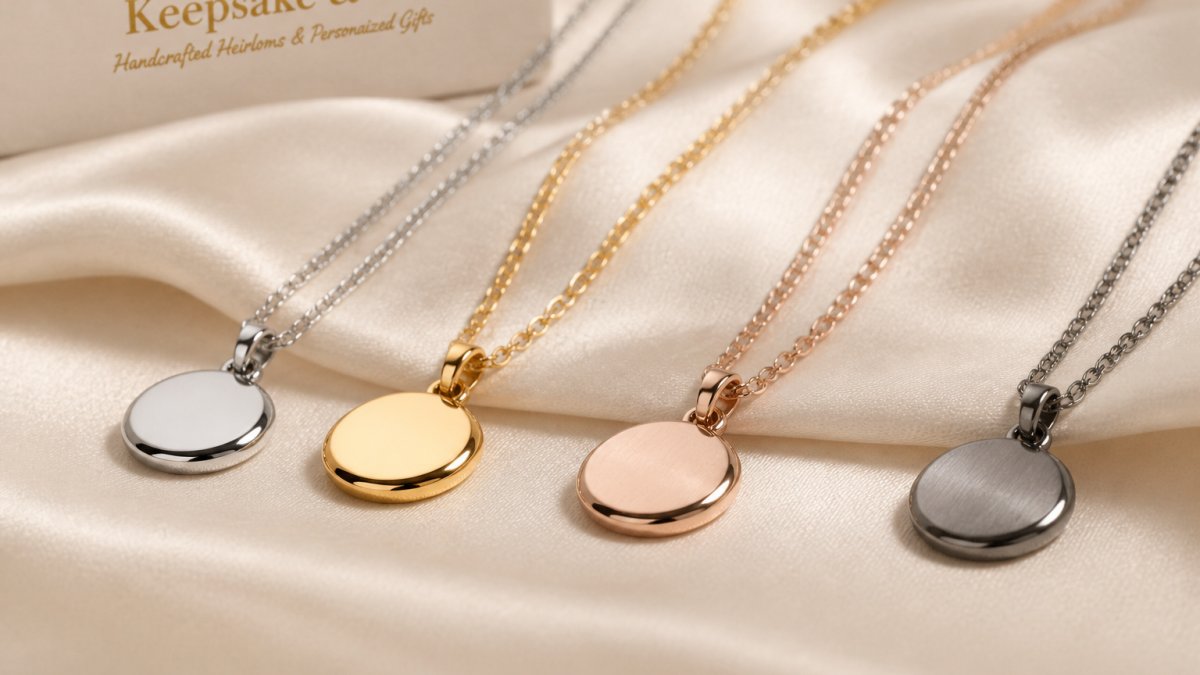
The best material for your custom jewelry depends on three factors: how often it will be worn, whether the wearer has sensitive skin, and your budget. For everyday wear by someone who wants minimal maintenance, stainless steel or 18K gold are your strongest options.
Hypoallergenic Options and Nickel Sensitivity
Nickel allergy is common, affecting roughly one in ten people, and it's often hidden in jewelry labeled as "gold-plated" or "costume jewelry." The base metal beneath the plating frequently contains nickel, which can trigger itching, redness, and skin reactions even when the surface is gold.
Hypoallergenic jewelry materials are those unlikely to cause allergic reactions. Solid gold (14K and higher), platinum, titanium, and surgical stainless steel are all considered hypoallergenic because they don't contain nickel or release nickel ions into the skin.
For custom necklaces at Keepsake & Co., our stainless steel and 18K gold options are both hypoallergenic and tarnish-resistant, making them ideal for wearers with metal sensitivities. Each necklace is handcrafted to order with an adjustable 16"-18" cable chain and comes packaged in a complimentary soft touch box, ready for gifting.
When selecting the best materials for custom jewelry that won't tarnish, think beyond the initial appearance. Consider the wearer's lifestyle, skin sensitivity, and how long you want the piece to remain beautiful. A carefully chosen material transforms a gift from something that looks good today into something that becomes more meaningful with every year of wear.
Choosing the right material ensures your personalized gift remains as beautiful as the moment it arrives. Keepsake & Co. specializes in custom necklaces crafted in tarnish-resistant stainless steel and 18K gold, each handmade to order with your loved one's name or a meaningful word. With fast production and shipping, your thoughtful gift can arrive in 7-10 business days, ready to become a cherished keepsake. Shop Now
Frequently Asked Questions
What types of jewelry won't tarnish?
Stainless steel and solid gold (14k and higher) resist tarnishing. Stainless steel and solid gold are the most reliable tarnish-resistant choices for everyday wear and custom pieces.
Does stainless steel jewelry tarnish?
Stainless steel jewelry rarely tarnishes because of its chromium content, which creates a protective oxide layer on the surface. This makes stainless steel ideal for custom jewelry that will be worn daily. Unlike sterling silver, stainless steel maintains its shine with minimal maintenance. Many custom necklaces, including personalized designs, use polished stainless steel for this reason, it's durable, affordable, and stays bright.
What's the difference between gold-filled and gold-plated jewelry?
Gold-filled jewelry has a thick layer of gold bonded to a base metal core (typically 5% or more of the total weight is gold), making it much more durable than gold-plated. Gold-plated jewelry has only a thin layer of gold over base metal, which wears away with regular use and moisture exposure. Gold-filled pieces can last 10-30 years with normal wear, while gold-plated typically lasts 1-3 years. For custom jewelry meant to be worn daily, gold-filled is the better investment.
How can I keep custom jewelry from tarnishing?
Store jewelry in a dry place, away from humidity and moisture. Avoid exposing pieces to perfume, lotion, and sweat, which accelerate tarnishing. Remove jewelry before swimming or showering. For stainless steel and gold, occasional gentle cleaning with mild soap and water keeps them looking new. Proper storage is the most effective way to prevent tarnish on custom pieces.
Is stainless steel or sterling silver better for everyday jewelry?
Stainless steel is superior for everyday wear because it doesn't tarnish, resists scratches better, and requires minimal maintenance. Stainless steel is also more affordable and hypoallergenic for most people. If you want a piece you can wear constantly without worry, like a custom personalized necklace, stainless steel is the practical choice.
Does gold-filled jewelry tarnish?
Gold-filled jewelry resists tarnishing much better than sterling silver or gold-plated options because the gold layer is thick and bonded to the base metal. However, the base metal underneath can eventually show through if the gold layer wears away from years of heavy wear and moisture exposure. With proper care and storage, high-quality gold-filled custom jewelry can remain tarnish-free for decades. It's a reliable middle ground between solid gold and gold-plated.
What materials are best for waterproof and moisture-resistant jewelry?
Stainless steel and solid gold (14k or higher) are the most moisture-resistant metals. These materials don't oxidize or tarnish when exposed to water. If you need custom jewelry for active wear or frequent water exposure, stainless steel or solid gold are your best options for long-term durability.


