


Table of Contents
- Why a Personalized Gift Quality Checklist Saves You From Disappointment
- Step 1: Inspect Materials Before You Order
- Step 2: Check Engraving, Printing, and Color Fidelity
- Step 3: Questions to Ask Custom Gift Manufacturers Before You Buy
- Step 4: How to Read Customer Reviews for Custom Items
- Step 5: Post-Purchase Quality Verification and Inspection Checklist
- Frequently Asked Questions
Last Updated: September 18, 2026
Why a Personalized Gift Quality Checklist Saves You From Disappointment
Learning how to verify quality of custom gifts before you order is the difference between a treasured keepsake and a return label. This guide from Keepsake & Co. walks you through a five-step inspection process that works for any custom item, from engraved jewelry to printed acrylic plaques.

Here's the hard truth: most custom gift sites show you a perfect mockup. What arrives is sometimes a different story. A crooked engraving, a washed-out color, or a chain that feels flimsy can turn a milestone moment into an awkward one.
That's why a quality checklist matters. It gives you a repeatable way to judge a gift before money changes hands. Below, we'll show you exactly how to inspect materials, read proofs, question makers, and check the final product when it lands.
The Three Quality Tiers of Custom Gifts
Custom gifts generally fall into three quality tiers: mass-produced blanks with a quick print, mid-tier items with real engraving or embroidery, and artisan pieces made to order with hand-finished details. Knowing which tier you're buying tells you what quality to expect.
- Tier 1: Stock item, printed or stamped fast. Fast and cheap, but details fade.
- Tier 2: Better base material, real engraving or stitching. A solid middle ground.
- Tier 3: Made to order, hand-inspected, packaged for gifting. Built to last.
Most disappointment comes from paying Tier 3 prices for a Tier 1 product. Your checklist should confirm which tier you're actually getting.
Step 1: Inspect Materials Before You Order
Material quality is the foundation of any keepsake. A beautiful engraving on a weak base will not survive daily wear. Ask what the item is made of before you look at anything else, and then ask for the specific evidence that proves it.
Most guides stop at "check the material." That advice is useless when you are buying remotely. What you actually need is a material-specific quality rubric: a short list of benchmarks, failure modes, and remote tests you can run before money changes hands. Below is the rubric we use for the four most common custom gift categories.
Material-Specific Quality Benchmarks
Different materials fail in different ways, so your benchmarks should change with the product. Use the rubric below as a script when you talk to a maker.
Stainless steel jewelry (necklaces, bracelets, cufflinks)
Gold-finished and gold-plated pieces
Acrylic and wood plaques
Textiles (blankets, towels, apparel)
How to Verify Materials When You Can't Hold the Item
A common mistake is judging by photo alone. Photos hide weight, feel, and finish. Use these three remote-buyer techniques instead:
- Request a spec sheet. Ask for material grade, thickness or weight, and finish type in writing. A maker who cannot produce this is guessing.
- Ask for a natural-light video. Studio lighting hides scratches, dull finishes, and thin plating. Ask for a 15-30 second clip of the actual item under daylight.
- Request a sample or a swatch. For orders over a few hundred dollars, ask whether a material swatch or a single sample piece is available. Many small shops will send one for the cost of shipping.
Step 2: Check Engraving, Printing, and Color Fidelity
Engraving depth and color accuracy are where most custom gifts quietly fail. A shallow engraving looks fine in a photo but rubs away within months. A print that looked rich on screen can arrive muddy or off-tone.
Ask these questions before you approve anything:
What to Look for in a Mockup or Proof
A mockup is a digital preview of your finished gift. Treat it as a contract, not a formality.
Check the proof for spelling, letter spacing, and design placement. Zoom in on the edges. Confirm the font matches what you chose. If the proof looks slightly off, it will look worse in person.
Step 3: Questions to Ask Custom Gift Manufacturers Before You Buy
The right questions to ask custom gift manufacturers reveal more than any product page. A maker who answers clearly and quickly is a maker who stands behind their work.
Custom Name Necklace - Classic Design →
Ask about production lead time, quality assurance steps, and their return policy for custom items. Ask whether the item is made in-house or outsourced. Ask what happens if the gift arrives damaged.
- Where is the item actually made and assembled?
- What is the production lead time, and does it include weekends?
- Do you inspect each piece before shipping?
- What is your policy if the engraving is wrong?
Vague answers are a red flag. A confident maker will tell you exactly how they check their own work.
Step 4: How to Read Customer Reviews for Custom Items
Customer reviews for custom items need a different reading than reviews for off-the-shelf products. You're looking for proof that the finished piece matched the promise.
Skip the star average and read the details. Look for customer testimonials that mention engraving clarity, color, and how the gift looked in person.
A few patterns worth noting:
- Reviews that mention repeat orders signal real trust.
- Photos from buyers show the actual product, not the mockup.
- Reviews mentioning fast shipping and gift-ready packaging matter for deadlines.
Step 5: Post-Purchase Quality Verification and Inspection Checklist
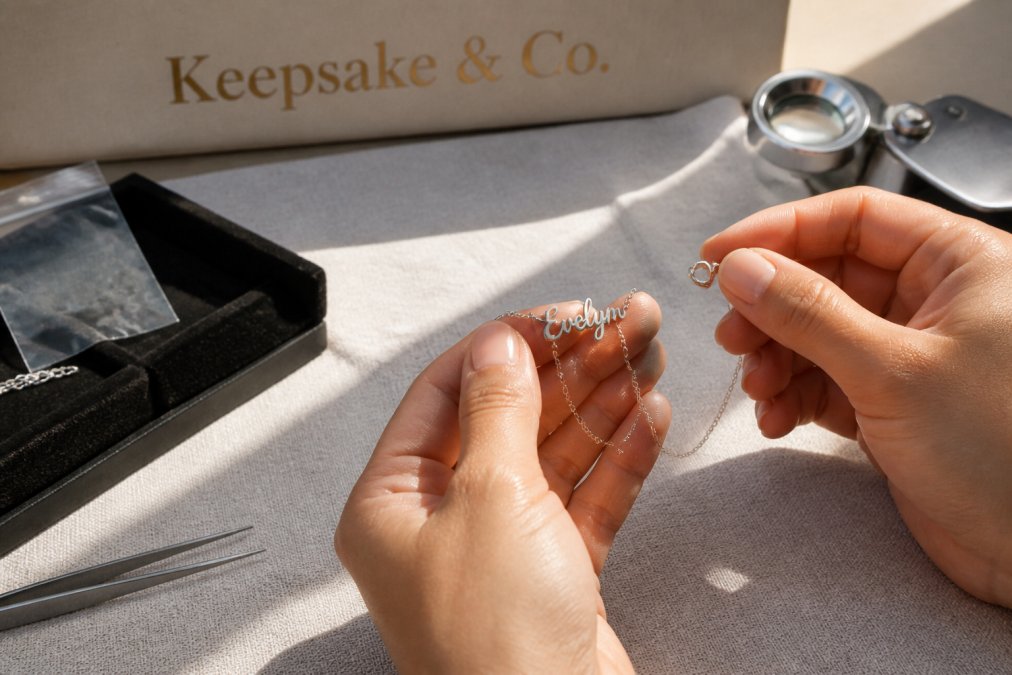
Post-purchase verification is how you catch problems while you can still act. Inspect the gift the day it arrives, before the occasion, so you have time to fix any issue. This is the step almost every buying guide skips, and it is the one that determines whether you actually got what you paid for.
The 48-Hour Inspection Window
Open the box the day it arrives and complete the inspection within 48 hours. Most custom shops have a short window, often 7 to 14 days from delivery, to report a defect before the order is considered accepted. Missing that window can turn a fixable error into a final sale.
- Photograph the unopened box and packing slip. This is your baseline if you need to file a claim.
- Inspect the packaging. Crushed corners, torn tissue, or a missing gift box are the first signs of rough handling.
- Inspect the item under natural light. Move it to a window. Artificial light hides scratches, cloudiness, and color shifts.
- Run the material-specific tests below.
- Compare against the approved proof. Pull up the proof on your phone and hold it next to the item.
Material-Specific Arrival Tests
Generic checklists tell you to "look for defects." That is not a test. These are.
Engraved metal (jewelry, tags, keychains)
Printed surfaces (acrylic, mugs, tiles)
Textiles (blankets, apparel, towels)
Wood items (plaques, boxes, cutting boards)
How to Document a Problem and File a Claim
If something is off, contact the maker right away with clear photos. Reputable shops fix genuine errors. For example, Keepsake & Co. backs every order with a 100% customer satisfaction guarantee, and most pieces ship from a USA factory in 7 to 10 business days.
A claim that gets resolved quickly has three parts:
- Photos: one of the whole item, one close-up of the defect, and one of the packing slip.
- A clear description: state what you ordered, what arrived, and how it differs from the approved proof.
- A specific ask: replacement, repair, or refund. Vague complaints get vague responses.
| Step | What to Check | Red Flag |
|---|---|---|
| Materials | Weight, finish, clasp | Hollow feel, thin plating |
| Engraving | Depth, spelling, edges | Shallow, crooked letters |
| Color | Match to proof | Muddy or off-tone print |
| Reviews | Details, buyer photos | Repeated same complaint |
| Post-purchase | Full inspection within 48 hours | Damage, wrong text, or missed claim window |
Frequently Asked Questions
What should I check before ordering a personalized gift?
Before ordering, confirm three things: the material specifications (stainless steel vs. plated, acrylic thickness, fabric weight), the production and shipping timeline, and the return policy for custom items. Ask for a digital mockup or proof showing exact spelling, font, and placement. Verify the seller's reviews mention accurate color and engraving quality. A personalized gift quality checklist with these items prevents most order mistakes.
How do I evaluate the material quality of personalized jewelry?
Look for specific material names like polished stainless steel or 18K yellow gold finish rather than vague terms like 'gold-tone.' Check the clasp type and chain adjustability. Stainless steel resists tarnishing and holds engraving depth well. Customer reviews mentioning durability after months of wear are the strongest signal.
How do I read customer reviews for custom items?
Focus on reviews that mention specific details: engraving sharpness, color accuracy compared to the mockup, packaging condition, and delivery time. Skip generic five-star reviews with no photos. Look for reviews from buyers who ordered the same product type you want. Pay attention to how the seller responds to negative reviews, since that reveals how they handle quality issues. Reviews mentioning 'looked exactly like the proof' are the most reliable quality signal.
What are common red flags when buying custom-made products?
Red flags include no mockup or proof before production, vague material descriptions like 'premium metal,' and a return policy that excludes all personalized items with no quality guarantee. Stock photos with no customer-submitted images also signal risk. If the seller cannot answer basic questions about engraving depth, color matching, or substrate material, the final product quality is unpredictable.


